
Best Web Hosting for Small Business in 2026: Full Comparison, Pros & Cons
Affiliate disclosure: This article contains a referral link. If you purchase hosting through it, we may earn a commission at no extra cost to you. We only recommend services we’ve researched and genuinely believe deliver value.
If you run a small business, your website is often the first — and sometimes only — impression a customer gets of you. That means choosing the best web hosting for small business isn’t a small technical detail you can skip over. It’s a decision that directly affects how fast your site loads, whether it stays online during your busiest sales day, and how much of your monthly budget disappears into a bill that keeps creeping up at renewal.
Table of Contents
This guide breaks down exactly what matters when picking the best web hosting for small business in 2026, compares the leading providers head to head, and explains a pricing trap that catches thousands of small business owners every year: paying premium prices for hosting that’s secretly been resold, overcrowded, and slowed down before it ever reaches you.
Why Small Business Hosting Is a Different Problem Than Personal Blog Hosting
A personal blog can tolerate a few seconds of load time and the occasional hiccup. A small business site can’t. If a customer is trying to book an appointment, check your prices, or complete a purchase and your site stalls for three seconds, research consistently shows a meaningful chunk of those visitors simply leave — and they usually don’t come back.
That’s why the best web hosting for small business has to be judged on a different scorecard than “cheapest available” or “looks fine on the surface.” You’re not just buying storage space. You’re buying uptime, response speed, security, and the ability to grow without a painful migration six months from now.
Here’s what actually separates good small business hosting from hosting that will quietly cost you customers:
- Uptime reliability — anything below 99.9% means real, measurable downtime over a year
- Server response time (TTFB) — the single biggest factor in how “fast” your site feels
- Resource isolation — whether you’re sharing a server with 20 other sites or getting dedicated capacity
- Scalability — can you grow from a single-page site to a full store without switching providers
- Support quality — when something breaks at 11 p.m. on a Friday, who answers
- Renewal pricing — the promotional price is not the real price; the second-year price is
The Small Business Hosting Trap Nobody Warns You About
Here’s something most “best hosting” roundups gloss over, and it matters enormously if you’re comparing prices between providers.
Many cheap hosting resellers don’t actually own or operate their own servers. Instead, they buy bulk hosting capacity from a larger provider (very often from the same infrastructure companies that also sell hosting directly to consumers), and then split that single server across dozens of unrelated customer websites to resell at a markup.
The practical effect: you might be paying the same monthly price as a customer who bought a proper cloud plan directly from the source — but your site is sitting on a server carved up between 15–20 other businesses, all competing for the same limited RAM, CPU, and bandwidth. When one of those neighboring sites gets a traffic spike, your site slows down with it. This is sometimes called the “noisy neighbor” problem, and it’s one of the most common — and least talked about — reasons a small business site feels sluggish despite the owner “paying for hosting.”
This is exactly why buying cloud hosting directly from an established provider, rather than through a reseller layer, tends to deliver a dramatically better experience for the same or lower price. Direct cloud plans typically include dedicated RAM allocations, a dedicated IP address, and resource limits that are actually enforced per-account rather than shared unpredictably.
What to Look for Before You Buy
Before comparing specific providers, here’s a practical checklist for evaluating the best web hosting for small business for your situation:
- Minimum 2–3GB of dedicated RAM on cloud or business plans (shared plans typically offer less, and it’s shared across many accounts)
- Unlimited bandwidth/traffic so a good sales day doesn’t trigger overage fees or a suspended site
- A dedicated IP address, which improves email deliverability and is often required for SSL certificates on custom setups
- NVMe SSD storage, which is dramatically faster than older HDD or even standard SSD storage
- A free SSL certificate included, not sold as an add-on
- Daily automated backups, ideally with one-click restore
- 24/7 live chat support, not just ticket queues with multi-day response times
- Clear renewal pricing listed upfront, not buried in fine print
Top Web Hosting Providers for Small Business in 2026 — Compared
1. Hostinger — Best Overall Value for Small Business

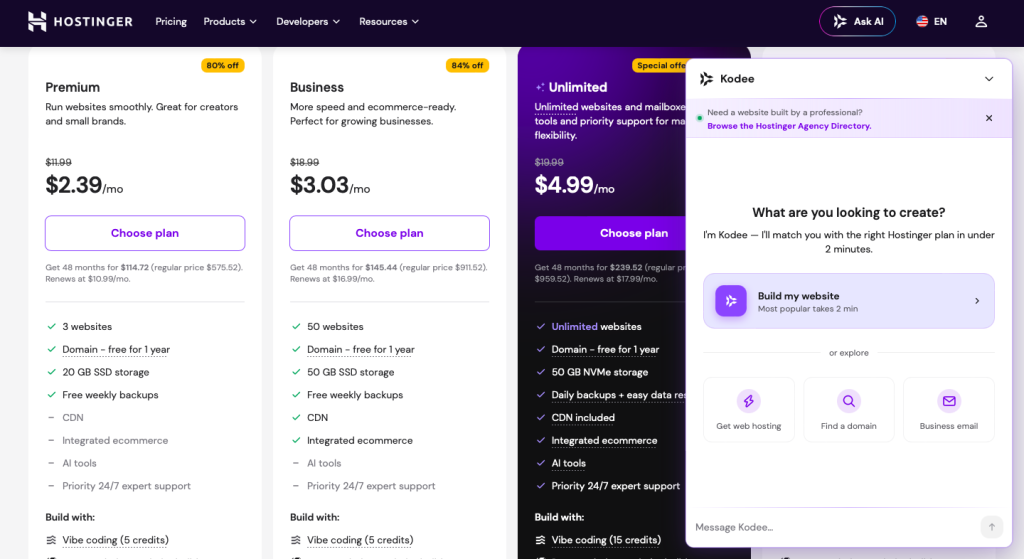
Hostinger has become one of the most consistently recommended hosts across independent testing in 2026, and for good reason: it pairs genuinely fast infrastructure with pricing that undercuts most of the market, even before counting the fact that its cloud startup plans include dedicated RAM and a dedicated IP as standard — features many competitors reserve for far more expensive tiers. 👉 Get Discount Now
Pros:
- Cloud startup plans include dedicated RAM (starting around 3GB), unlimited traffic, and a dedicated IP address as standard
- LiteSpeed server technology, which consistently benchmarks faster than standard Apache setups used by several competitors
- Free domain and free SSL certificate included on most plans
- Built-in AI website builder and AI tools for small business owners without a developer on staff
- Aggressive introductory pricing that remains competitive even at renewal compared to rivals
- 30-day money-back guarantee (14 days on cloud plans)
- 24/7 live chat support
Cons:
- Entry-level shared plans (not the cloud tier) can still suffer from shared-resource limitations common across the industry
- Phone support is not available on lower plans — live chat only
- Some advanced enterprise features are reserved for higher-tier plans
2. SiteGround — Best for Reliability-Critical Sites
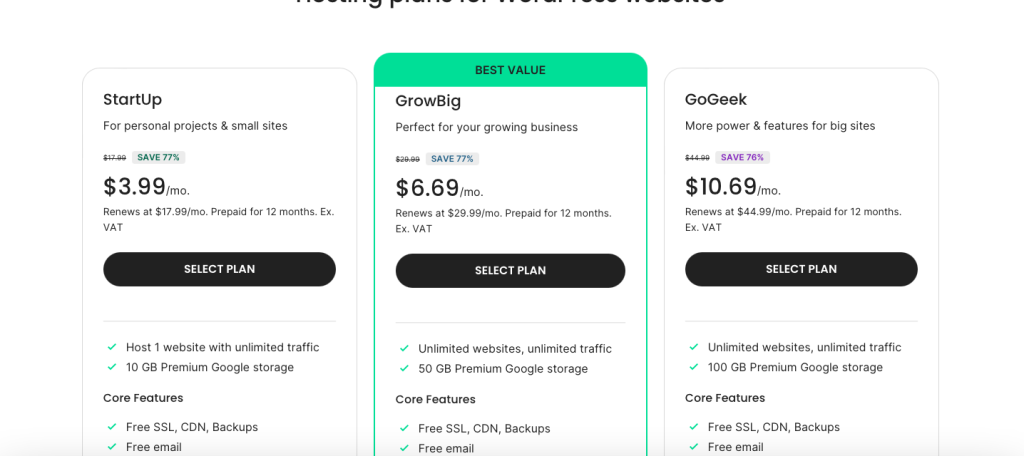
SiteGround runs on Google Cloud Platform infrastructure across multiple global data centers and is one of only a handful of hosts officially recommended by WordPress.org. https://www.siteground.com
Pros:
- Consistently excellent uptime performance in independent monitoring
- Very fast initial support response times
- Strong built-in security tools, including proactive bot-blocking
- Free daily backups with 30-day retention
Cons:
- Noticeably higher renewal pricing than Hostinger and most budget competitors
- Storage limits on entry plans are tighter than comparable options
- Migration tools are more limited on lower-tier plans
3. IONOS — Best for Businesses Planning to Scale
Pros:
- Very low entry-level pricing
- Scales cleanly from shared hosting up through cloud and dedicated infrastructure
- Includes email hosting bundled into most plans
Cons:
- Uses Apache rather than the faster LiteSpeed stack some competitors offer
- Interface feels less modern than newer competitors
- Add-on pricing can accumulate quickly
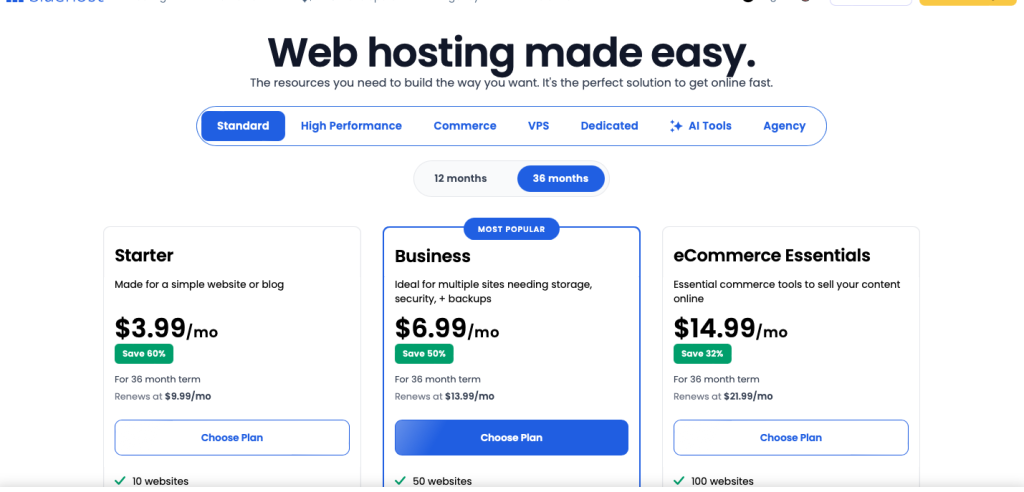
4. Bluehost — Best for WordPress-Only Small Businesses Get it now
Pros:
- Deep, mature WordPress integration
- Officially recommended by WordPress.org
- Solid guided setup for non-technical owners
Cons:
- Less competitive pricing outside WordPress-specific plans
- Renewal price increases are steeper than several competitors
- Fewer general-purpose hosting options for non-WordPress projects
5. GoDaddy — Best for Ecommerce Bundling
Pros:
- Strong ecommerce tooling bundled directly into hosting plans
- Well-known brand with wide domain/hosting integration
Cons:
- Historically among the more expensive options at renewal
- Upsells are aggressive throughout the checkout and account management flow
Quick Comparison Table
| Provider | Starting Price | Dedicated RAM (Cloud Tier) | Dedicated IP | Uptime (Tested) | Best For |
|---|---|---|---|---|---|
| Hostinger | ~$2.99/mo | ✅ From ~3GB | ✅ Included on cloud plans | ~99.9%+ | Best overall value |
| SiteGround | ~$2.99/mo (renews higher) | Limited on lower tiers | Add-on | ~99.99% | Reliability-first sites |
| IONOS | ~$1.00–$2/mo | Available on higher tiers | Add-on | ~99.9% | Scaling businesses |
| Bluehost | ~$2.99–$5.99/mo | Limited on lower tiers | Add-on | ~99.9% | WordPress-only sites |
| GoDaddy | ~$5.99+/mo | Add-on | Add-on | ~99.9% | Ecommerce bundling |
Stop sharing a server with 20 strangers.
Get cloud hosting built for one site — yours — with unlimited traffic, a free domain for the first year, and a 30‑day money‑back guarantee.
Claim Up to 80% Off + Free DomainCloud Hosting vs. Shared Hosting: What Small Businesses Actually Need
A lot of small business owners default to the cheapest shared hosting plan they can find, assuming “hosting is hosting.” It isn’t.
Shared hosting puts your site on a server alongside potentially dozens of other websites, all splitting the same pool of CPU and RAM. It’s fine for a very simple brochure site with low traffic and no urgency around speed.
Cloud hosting, by contrast, allocates dedicated resources — RAM, CPU cores, storage I/O — specifically to your account, and typically includes a dedicated IP address. For a business where site speed affects conversions, bookings, or sales, this difference is not cosmetic. It’s often the entire reason one small business’s site “feels slow” while a competitor’s, running on genuinely equivalent traffic, does not.
The good news: cloud hosting has become dramatically more affordable. Where a dedicated-resource cloud plan used to be priced for enterprise budgets, providers like Hostinger now offer cloud startup plans, with dedicated RAM and a dedicated IP included, at pricing that competes directly with basic shared hosting plans elsewhere.
How Much Should a Small Business Actually Budget for Hosting in 2026?
One of the most confusing parts of choosing the best web hosting for small business is that almost every provider advertises a price that only applies for a limited introductory period, usually the first 12 or 24 months, and only if you pay the full term upfront.
Here’s a realistic breakdown of what small businesses typically pay across the market in 2026:
- Entry shared hosting: $2–$6/month promotional, often renewing at $8–$13/month
- Cloud hosting with dedicated resources: $8–$15/month promotional, often renewing at $15–$25/month
- Managed WordPress hosting: $15–$30/month, with smaller renewal gaps than shared plans
- VPS/dedicated hosting: $20–$80+/month depending on resource allocation Try Now
A useful rule of thumb: multiply the advertised introductory price by roughly 2.5–3x to estimate your realistic renewal cost, and budget accordingly rather than being surprised a year in. Providers that keep this gap smaller — Hostinger’s cloud plans are a notable example — tend to be a better long-term value even if a competitor’s headline price looks slightly lower on day one.
It’s also worth factoring in what’s bundled versus sold separately. A plan advertised at a lower monthly price that charges extra for SSL certificates, backups, or a dedicated IP can easily end up costing more in total than a plan that includes all of that from the start.
Security Features Every Small Business Website Needs
Security isn’t optional once your website starts handling customer information, whether that’s a contact form, a booking system, or payment details. When evaluating the best web hosting for small business, check specifically for:
- Free SSL certificates, automatically renewed — required for any site collecting customer data, and increasingly required just to avoid browser warnings
- Automated malware scanning, ideally daily, with automatic removal rather than just alerts
- DDoS protection built into the hosting infrastructure, not sold as a separate add-on
- Daily automated backups with easy one-click restore — this matters more than almost any other feature, because it’s the difference between a bad afternoon and losing your entire site
- Web application firewall (WAF) protection against common attack patterns
- Two-factor authentication on your hosting account login itself, not just your website’s admin panel
Small businesses are disproportionately targeted by automated attacks precisely because attackers assume smaller sites have weaker security than large enterprises. A host with strong default security settings closes most of that gap without requiring you to configure anything manually.
Migrating to a New Host Without Losing Your Site
If you’re currently on a slow or overcrowded reseller plan and considering a switch, migration is far less risky than most small business owners assume — as long as you follow the right order of operations.
- Back up your current site fully — files and database — before touching anything
- Choose your new host and set up hosting first, without cancelling your old plan yet
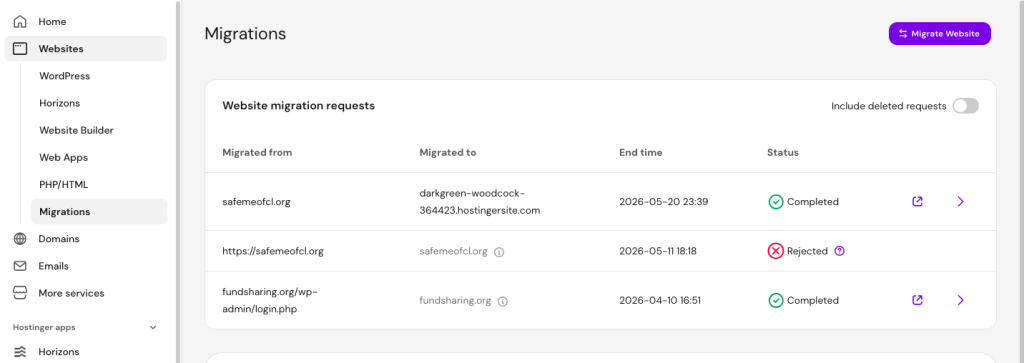
- Use a free migration tool or migration service — most reputable hosts, including Hostinger, offer either automated migration plugins or free manual migration assistance
- Test the new site on a temporary URL before pointing your domain to it
- Update your domain’s DNS to point to the new host once you’ve confirmed everything works
- Wait 24–48 hours for DNS propagation before cancelling your old hosting plan, in case you need to roll back
Most small business websites can be migrated with zero downtime when this order is followed correctly, and reputable hosts will often do the technical migration work for you at no charge as part of onboarding a new customer.
Common Mistakes Small Business Owners Make When Choosing Hosting
- Choosing based on the lowest visible price alone, without checking the renewal rate
- Not knowing whether they’re buying from a reseller versus a provider that runs its own infrastructure
- Skipping backups because they weren’t automatically included, then losing months of content after a site issue
- Buying far more hosting capacity than needed out of caution, when a mid-tier cloud plan would have been sufficient
- Ignoring support quality until the moment something breaks, when it’s too late to switch easily
- Assuming all “unlimited” plans are equal, when the underlying resource allocation and enforcement policies vary significantly between providers
Frequently Asked Questions
Is shared hosting good enough for a small business? For a very simple, low-traffic brochure site, shared hosting can work. But if your site handles bookings, sales, lead forms, or meaningful traffic, cloud hosting with dedicated RAM avoids the slowdowns that come from sharing a server with unrelated, unpredictable neighbors.
What’s the real difference between a promotional price and a renewal price? Almost every host advertises a discounted introductory rate for the first billing term. Always check the renewal price before committing — some providers increase pricing by 200–300% after the first term.
Do I need a dedicated IP address? Not strictly required for every site, but it improves email deliverability, is often needed for certain SSL/security configurations, and avoids your site being associated with the reputation of unrelated sites sharing an IP.
How much RAM does a small business site actually need? For a typical WordPress-based small business site with moderate traffic, 2–3GB of dedicated RAM is a reasonable, comfortable baseline — well above what most basic shared plans allocate per account.
How can I tell if I’m on a reseller server instead of a direct hosting plan? Look for vague resource limits (“fair use” bandwidth with no specific number), a support team that can’t answer detailed infrastructure questions, and pricing that seems too close to the provider’s own direct-sale plans to make sense as a separate business. When in doubt, buying directly from an established provider removes the guesswork entirely.
Is it worth paying more for managed hosting instead of standard shared or cloud hosting? Managed hosting adds automatic updates, deeper security monitoring, and hands-off maintenance — valuable if you have no technical staff and zero time to manage your site. For most small businesses comfortable with a simple dashboard, a well-specified cloud plan delivers similar practical performance at a lower price point.
Best Web Hosting for Small Business by Use Case
Not every small business has the same hosting needs. Here’s how to match the best web hosting for small business to your specific situation:
Service-based businesses (consultants, agencies, local services): A lean cloud plan with a dedicated IP and solid uptime is usually enough — your site’s job is to look professional and load fast for people researching before they call or book, so speed matters more than storage.
Ecommerce and online stores: Prioritize a plan with generous storage, strong security (fraud protection, SSL, and a web application firewall), and enough dedicated RAM to handle checkout traffic without slowing down — this is where cheap, overcrowded reseller hosting causes the most damage, since a slow checkout page directly costs you sales.
Content-driven small businesses (blogs, resource sites, local media): Look for hosting with strong caching and CDN support, since page speed directly affects both search rankings and how long visitors stay on the page.
Multi-location or franchise businesses: Unlimited websites on a single plan (a feature Hostinger includes even on entry cloud tiers) lets you manage multiple location pages or microsites without paying for a separate hosting account each time.
Across all four categories, the same underlying principle holds: the best web hosting for small business is the plan that matches dedicated resources to your actual traffic pattern, rather than the plan with the lowest number on the pricing page.
Bottom Line
If you want the best web hosting for small business in 2026 without overpaying or getting stuck on an overcrowded reseller server, look past the sticker price and check what you’re actually being allocated: dedicated RAM, a dedicated IP, unlimited traffic, and real uptime numbers — not just a low-looking monthly figure.
Based on current pricing, infrastructure, and independent testing, Hostinger’s cloud startup plans currently offer the strongest combination of dedicated resources and affordability for small businesses that need speed without an enterprise budget.
👉 Check current Hostinger cloud hosting plans and pricing
This is an affiliate link — using it costs you nothing extra and helps support this site.
100 doller / month i am running 20 website, check it Now: News Site: Tajakhawar , Responsibility , travel site and many more.
Read More from SafeMe
What to Do When Facebook Hacking Happens | Step-by-Step Recovery Guide 2025